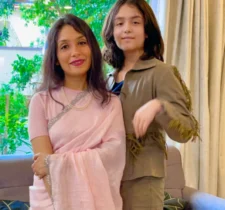

This Diwali season, my sister and I enjoyed going through (read as rummaging) our mother’s saree collection; we wore a couple of her sarees for festive evenings.
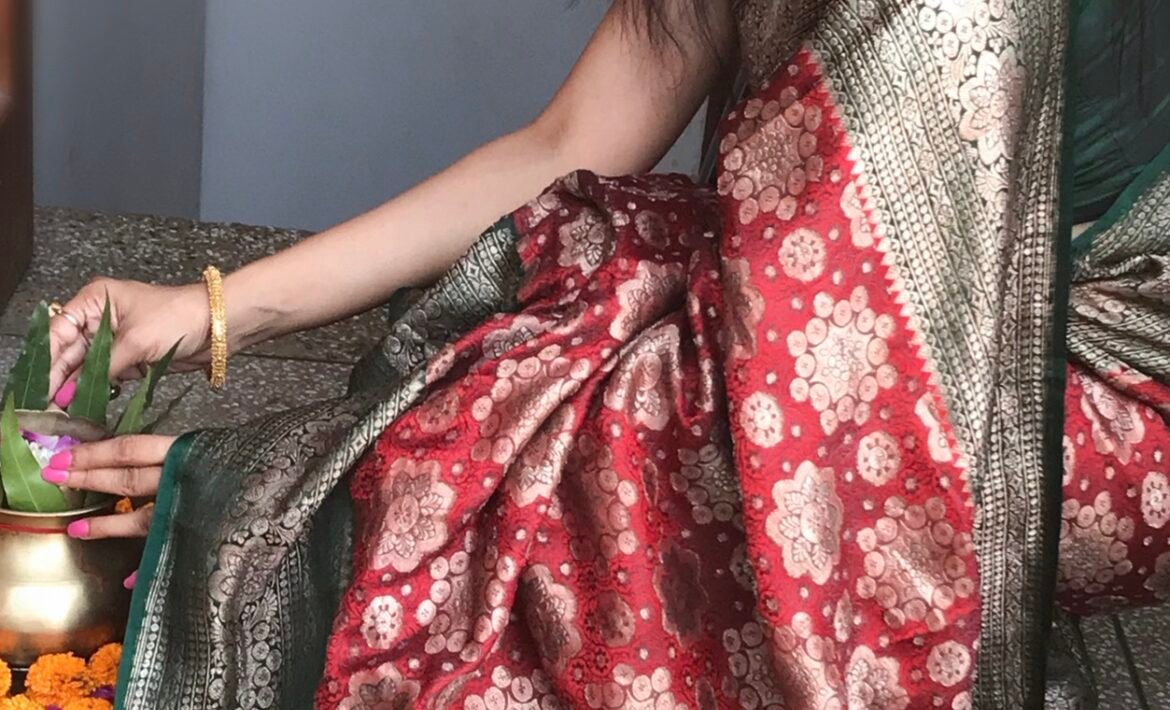
On last day of Diwali, I wore a Banarasi saree, which is over 35 years old and has been my favourite since childhood. The fragrance of real zari, along with the gleam and occasional dullness (when left unpolished for years, tucked away in dark corners of a box) are all part of the saree stories that live in crevices of memory.
As I took out this favourite red and green Banarasi saree to wear , I was amazed by the weight of this pure zari elegance. I looked at it in awe, as I reminisced my mother wearing it during pujas at home. The floodgates of involuntary memories opened and I remembered how beautiful my grandmother looked in her sarees — mostly crisp cottons for school , since she was a vice-principle. For all other occasions like pujas and weddings, Nani wore silk sarees. My great-grandmother, who I have little recollection of, was also a saree-lady. She was a teacher in pre-independence India in 1930s, a time when less than 3% Indian women were educated.( as per census, the female literacy rate was 1.8% in 1921 and 2.9 % in 1931 )
My mother also followed in the graceful “saree” footsteps and the glorious “education” footsteps (though she is a business woman ). Even today she wears saree when she steps out for work whether an office visit or factory. Apple doesn’t fall far from the tree and hence education and saree are both important to me too. Though the credit also goes to my father for always encouraging us to chose elegance and intelligence over everything else.
The one fact that my great-grandmother, Nani, mother, & I also shared until earlier this year was, we didn’t have to pay taxes on our sarees. A beautiful fact that was common for generations of women, tax-free Indian wear. My “Grands” definitely departed an India which was free of “saree-tax”. Perhaps, strong laws cannot stand strong women, and they lived through times when Independence for Country and women empowerment was more important than burdening them with taxes. I wonder if My grandmother and great-grandmother would have agreed to paying taxes (GST) on saree? I doubt they would succumb to such tax regimes.
My saree collection is divided into two eras- pre-GST and post-GST.
For working hard wasn’t good enough, nor was taking the time to keep our ethnic wear spirit alive. We must pay 12% taxes on that too.
Taxes are important for Nation-building and with evolving times, taxes evolve too. However, the rates and range of taxes imposed can surely be reconsidered to offer some relief.